
Led by Israel’s Yad Vashem, the initiative has been underway since the 1950s. But it recently got a boost from artificial intelligence, which is helping humans search through the records
By Sarah Kuta, The Smithsonian Magazine, November 13, 2025. Click for report from The Smithsonian Magazine.
Between 1933 and 1945, Adolf Hitler’s Nazi regime systematically murdered an estimated six million Jews throughout Europe. But in most cases, the Nazis and their collaborators did not issue death certificates for their victims.
For the past seven decades, experts at Yad Vashem, the World Holocaust Remembrance Center in Israel, have been working to identify every victim of the Holocaust. The initiative, called the Central Database of Shoah Victims’ Names, recently achieved a major milestone: compiling the names of five million individuals.
“Behind each name is a life that mattered—a child who never grew up, a parent who never came home, a voice that was silenced forever,” says Dani Dayan, chairman of Yad Vashem, per Reuters’ Steven Scheer. “It is our moral duty to ensure that every victim is remembered so that no one will be left behind in the darkness of anonymity.”
The initiative has been underway since the 1950s, with scholars, survivors and descendants joining forces to record the names of as many victims as possible. It got a boost last year when Yad Vashem developed an artificial intelligence-powered software to help human researchers sift through historical records.
The five million names recovered so far are available in six languages in an online database, along with personal files—known as “Pages of Testimony”—about some of the victims. The “Pages of Testimony” project, which in 2013 was added to UNESCO’s Memory of the World Register, allows family members and friends to share what they know about individuals murdered during the Holocaust.
Quick fact: What information do “Pages of Testimony” include?
Since the 1950s, the program has collected about 2.8 million names, along with biographical details and photos when available.
Since most victims do not have graves, the pages are like “tombstones for the Jews who were assassinated during the Holocaust,” says Alexander Avram, director of the Hall of Names and the Central Database of Shoah Victims’ Names, to NBC News’ Jesse Kirsch and Paul Goldman.
An additional one million Jewish victims still need to be identified. But with the help of A.I., the project’s leaders say at least 250,000 more names could be recovered in the near future, per Reuters.
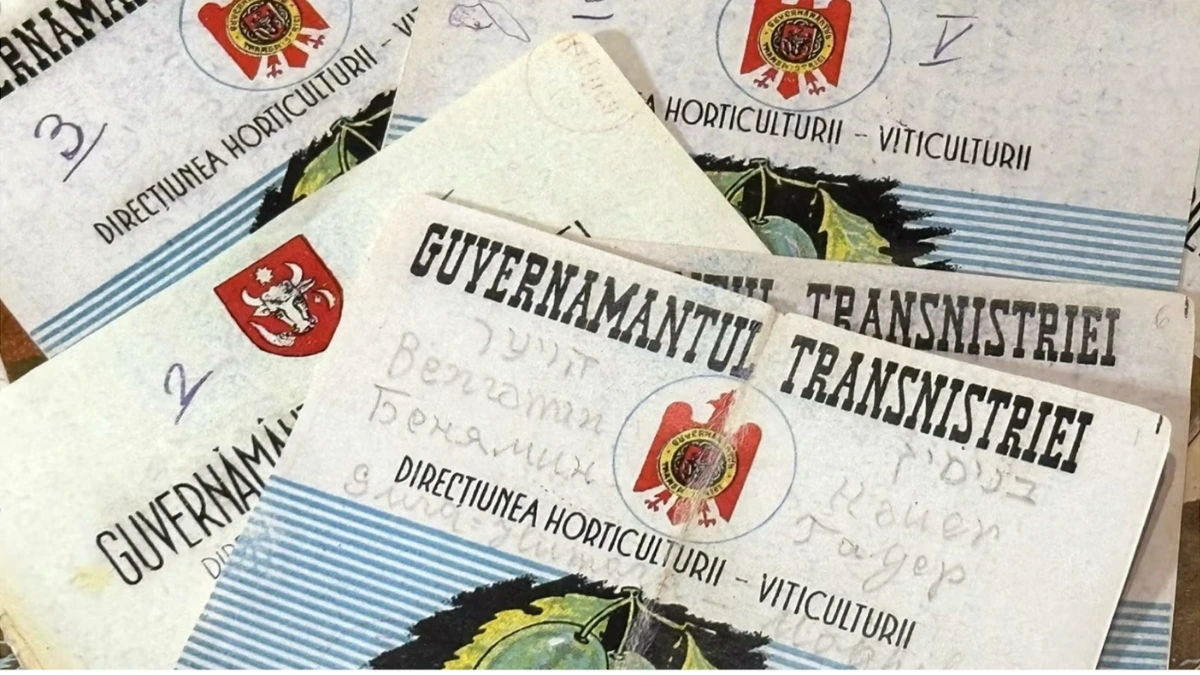
Already, A.I. has helped compile a “significant amount” of names, says Daniel Shalom, head of technology and innovation at Yad Vashem, to Haaretz’s Ofer Aderet. One of the ways the technology has helped is by cross-referencing names from survival testimonies with other materials to ensure those individuals had not already been added to the Central Database of Shoah Victims’ Names.
After training, the technology can also scour documents to piece together family trees. “We haven’t exhausted its potential yet,” Shalom adds.
Moving forward, Yad Vashem will use A.I. to search for additional names in international databases. But no matter how long it searches, the A.I. tool won’t be able to produce all of the missing names, because it can only find those that already exist in the historical record. With that limitation in mind, organizers are calling on survivors and descendants to continue sharing their stories. They say time is of the essence, as only a small group of Holocaust survivors is still alive, and most are in their 80s and 90s. “This is the last hour,” Avram tells NBC News.
Researchers admit they will likely never be able to identify all of the victims of the Holocaust. But that won’t stop them from trying.
Their work, Avram tells Haaretz, counters the Nazis’ attempts to “erase the very memory of their existence.”
“By identifying each Jewish person,” he adds, “we are restoring their identity and ensuring that their memory will be preserved forever.”