Joe Edwards – Staff Writer, Dallas Express. Click for full report.
After more than a decade of legal battles, a new law is aimed at helping Jewish families pursue claims for artwork stolen by the Nazi regime – pieces that have sat in galleries, private collections, and museum storage rooms for over 80 years.
President Donald Trump signed the Holocaust Expropriated Art Recovery (HEAR) Act of 2025 into law on April 13, strengthening protections first established under the original HEAR Act passed in 2016
Representative Jerrold Nadler (NY-12), the bill’s lead Democratic sponsor, described the signing as the high point of more than a decade of relentless advocacy. “More than 100,000 works of art that were stolen by the Nazis from Jewish families during the Holocaust remain unrecovered. Together we confronted this unacceptable and repugnant reality, which continued to allow entities and individuals to profit off the Jewish people’s pain. Now this new law will further help these families in their legal battles to seek justice in our courts,” Nadler said in a press release after the law was officially signed.
The law addresses an obstacle faced by some families of Holocaust victims: where statutes of limitations and procedural technicalities have allowed museums, dealers, and private collectors to keep works with disputed origins even when families could prove the art had been looted. The law is intended to ensure those claims are heard on the merits rather than dismissed on procedural grounds.
“In the United States, every victim and family member with a credible claim deserves to have their day in court, with their case heard on the merits alone,” Nadler said. “Justice will no longer be denied due to procedural technicalities and legislative sunset provisions.”
The updated law strengthens and builds off protections from the original 2016 version, which had included a “sunset provision” that threatened to let the legislation expire. The 2025 law removes the sunset provision and limits certain time-based and other non-merits defenses in otherwise timely claims.
For many families, the journey to recover stolen art has spanned generations – grandchildren and great-grandchildren pursuing claims for works their relatives never saw again after fleeing Nazi persecution.
“While we cannot reverse the horrors of the Holocaust, we can ensure that in an American courtroom, the truth of a family’s legacy carries more weight than a legal loophole,” Nadler added.
The Scale of Nazi Art Theft
The Nazis’ theft of art during the Holocaust was one of the largest organized thefts of cultural property in history. The Claims Conference and WJRO report says it has been estimated that over 100,000 of the 600,000 paintings stolen during the Holocaust have never been returned, along with many more books, manuscripts, ritual items, and other cultural objects.
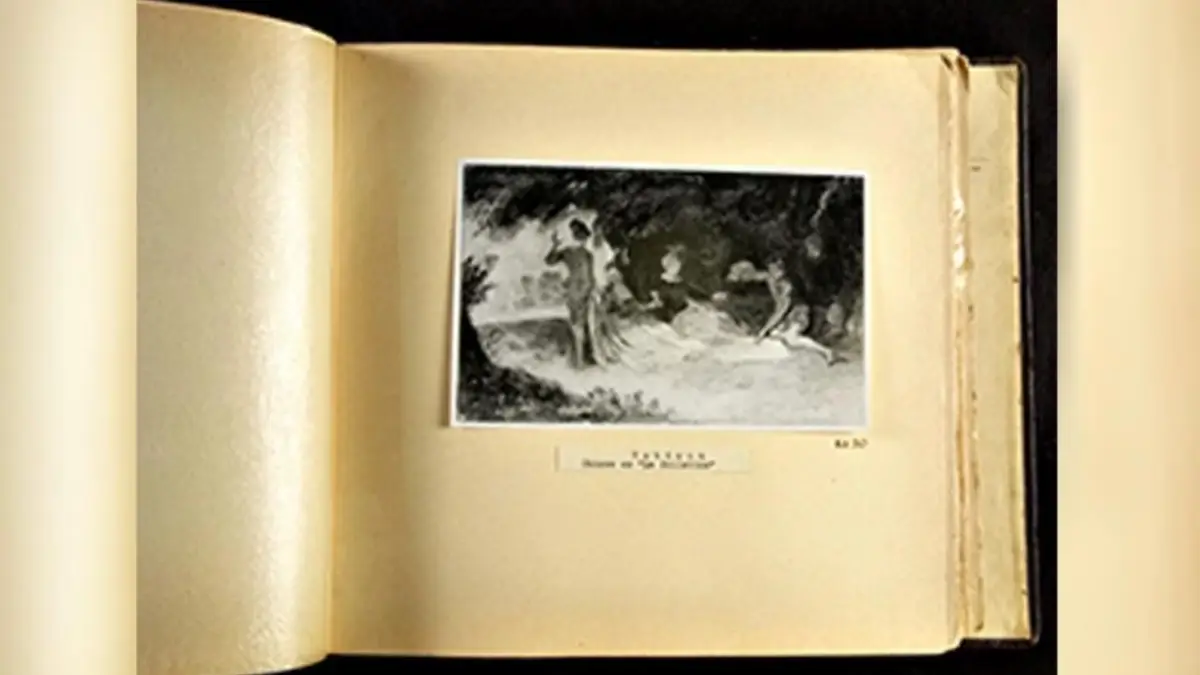
The Nazis used dedicated looting agencies, most notably the Einsatzstab Reichsleiter Rosenberg (ERR), which catalogued and confiscated art from Jewish homes, galleries, and dealers across France, the Netherlands, Poland, and beyond. Much of the plunder was destined for Hitler’s planned “Führermuseum” in Austria – a “grand cultural institution” that was never built.
At the war’s end, Allied forces recovered hundreds of thousands of works stored in salt mines, caves, and fortified depots across Germany and Austria. But returning and redistributing the artwork was chaotic to say the least. Some pieces were returned to their countries of origin rather than their original owners, others were absorbed into public museum collections, and still others quietly entered the postwar grey art market – ending up in galleries, auction houses, and private hands around the world.
Researchers say major institutions and private collections around the world still hold works with unresolved Nazi-era provenance questions.
The Art Loss Register, the world’s largest database of stolen art, contains more than 700,000 records, including many linked to Nazi-era losses and thefts. Despite decades of restitution efforts, some experts estimate that tens of thousands of works remain unaccounted for – hanging in living rooms, sitting in storage, or waiting to surface at auction – their stories buried with the families they were taken from.