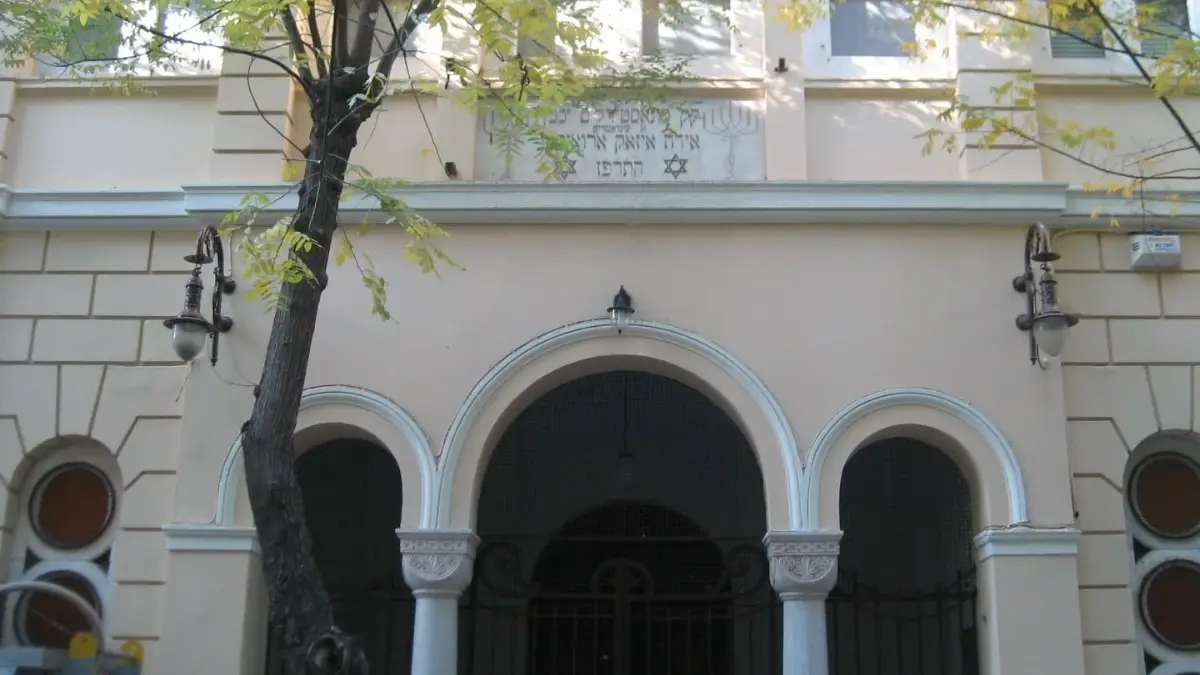
Monastir Synagogue, Thessaloniki, Greece. Credit: NYC2TLV / Wikimedia Commons / CC BY 3.0
By Nisha Zahid, Greek Reporter, April 9, 2026. Click for full report.
A major digital archive documenting Greek Jewish history before World War II, is now publicly accessible, offering new insight into communities later destroyed during the Holocaust.
The online platform, called, Josephus or Iossipos (Ιώσηπος) in Greek contains more than 212,000 records and about two million digital images. It brings together material from Jewish communities in Thessaloniki, Athens, Rhodes, Larissa, and Volos. The archive was presented at the Athens Concert Hall during an event organized by the Jewish Community of Thessaloniki.
Named after the 1st-century historian Flavius Josephus, the project aims to preserve historical memory while making records widely accessible. Organizers say it is one of the most extensive digital collections on Jewish heritage in Greece.
The initiative was led by the Jewish Community of Thessaloniki with support from the European Union and Greece’s national Digital Transformation program for 2021–2027. The Hellenic Telecommunications Organization oversaw implementation, with Enneas IKE as a subcontractor.
The project cost about €4 million ($4.86 million) and took just over three years to complete. A team of 30 specialists worked to collect, digitize, and organize the material into a searchable system.
Users can access the archive by entering a family surname. The platform returns birth and death certificates, family trees, photographs, and religious objects. It is expected to support both academic research and personal efforts to trace family histories, especially among members of the Jewish diaspora.
One entry in the archive shows how separate locations in Athens connect through a single wartime story. Three addresses — Merlin Street 6, the junction of Stadiou and Eduardou Lo streets, and Alikarnassou 26 — appear unrelated. The archive’s interactive map links them to events that began in September 1943 at the Gestapo headquarters on Merlin Street.
Historical records show that SS officer Dieter Wisliceny summoned Athens’ Chief Rabbi, Eliaou Barzilai, and ordered him to submit a list of all Jews in the city. Asser Moissis, who had recently moved to Athens, waited nearby to learn what had happened.
Later that day, Barzilai was secretly removed from his home. His beard was shaved to change his appearance. He was then disguised and taken out of the city. He eventually reached Agrinio and later joined resistance fighters in the mountains, avoiding capture. After reaching safety, he sent a message thanking Moissis for his help.
Beyond individual stories, the archive presents broader aspects of Jewish culture. Its heritage section features figures such as Alberto Nar, Mordechai Frizis, and Julio Kaimi.
A separate section includes rare song recordings and oral traditions from the Molho family archive, capturing elements of everyday cultural life.
Project officials say the platform will also support the future Holocaust Museum in Thessaloniki. They describe it as a lasting digital resource designed to preserve memory and provide global access to Greek Jewish history.