Family lore said she wrote an article about her concentration camp experience soon after liberation.
By Daniella Greenbaum Davis, Washington Post, September 16, 2026. Click for full report. Daniella Greenbaum Davis is a writer and social media strategist in New York.
Masha Rolski was 14 when World War II reached Lithuania, and 18 when British troops freed her from the Nazis’ Bergen-Belsen concentration camp in Germany. I grew up with family lore that Masha, my grandmother, had written an article about her liberation day experience soon after it happened, but where it was published, if it had been, and under what circumstances, wasn’t clear.
By the time I was old enough to ask my grandmother about it, her own memory — she had written many articles and books over the years — was hazy. She died in 2024 at age 97.
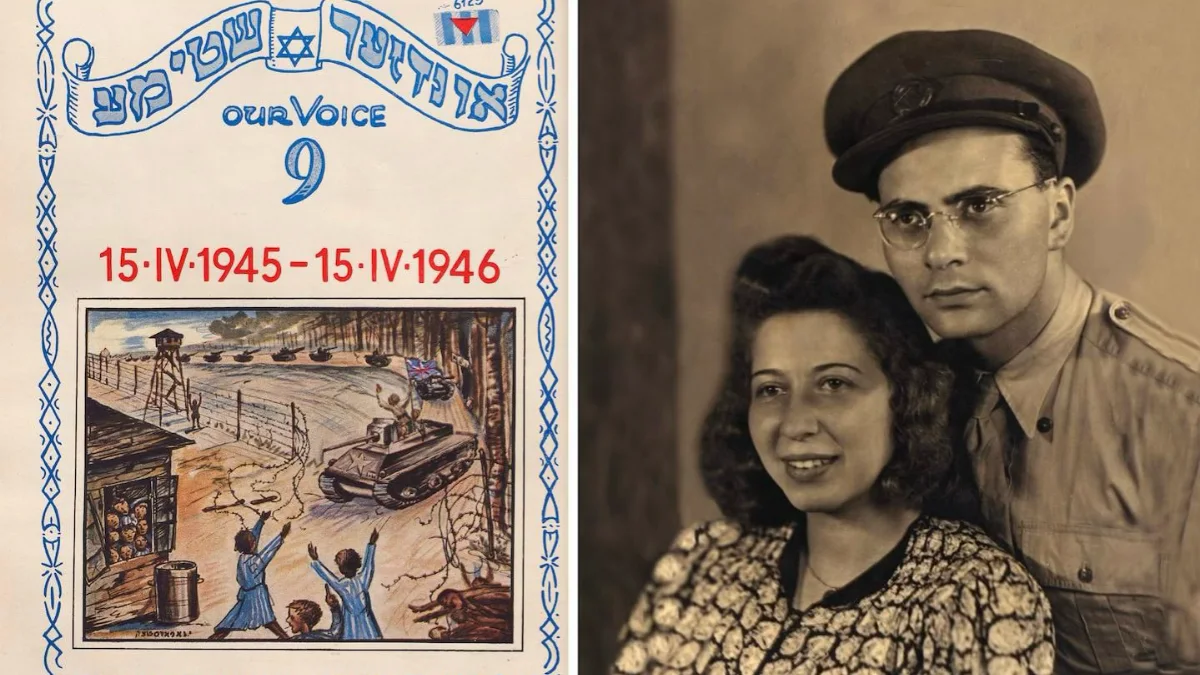
For the better part of a decade, I searched in databases and archives for postwar publications where such an article might have appeared. A few years ago, I found a biographical description of Masha that mentioned two Yiddish journals she had written for. One was Unzer Sztyme, or Our Voice. Unzer Sztyme was started by survivors of Bergen-Belsen in a displaced-persons camp not far from the concentration camp where approximately 50,000 people died, most of them Jews, including 15-year-old Anne Frank.
I was excited — Unzer Sztyme was the most promising source I’d encountered — but I don’t read Yiddish, and though I could download editions online, much of the material hadn’t been translated. It was needle-in-a-haystack work, opening and scanning hundreds of pages, using online tools to translate each one. It was such an impractical process that eventually I abandoned it.
Our family has other descriptions Masha wrote later in life about her experience during the Holocaust, but if she wrote a contemporaneous account of liberation day, I still longed to find it. In the meantime, I did my best to trace and document the rest of Masha’s journey.
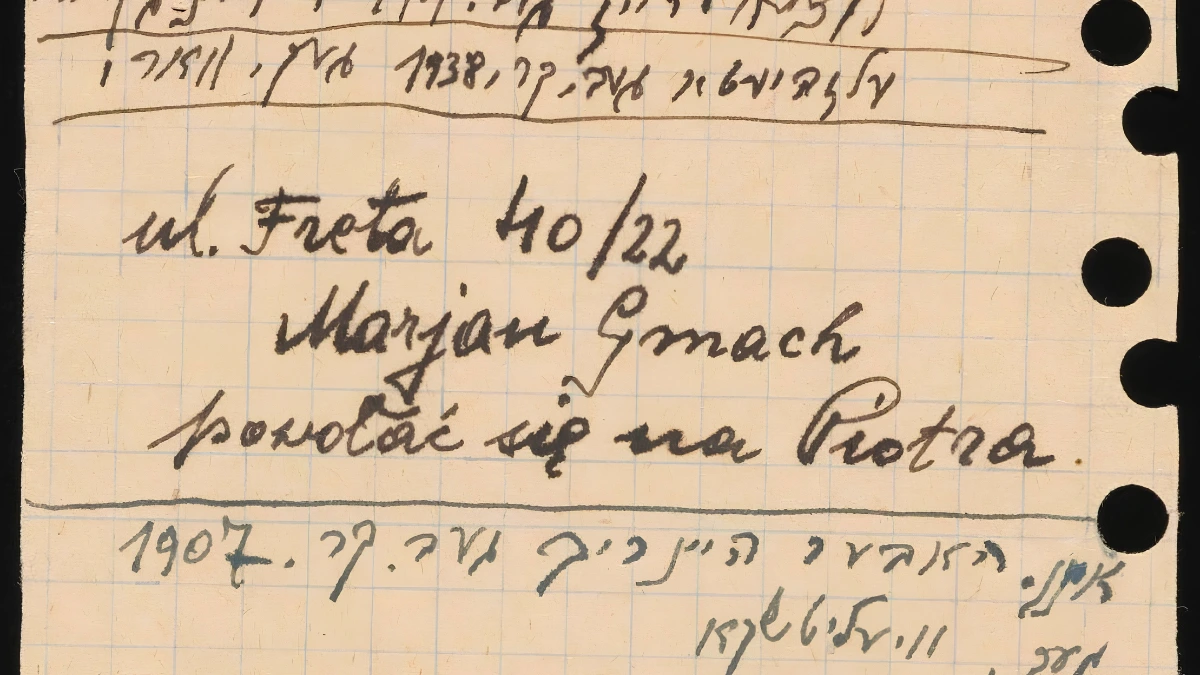
The British troops who liberated Bergen-Belsen in April 1945 collected letters from survivors with the aim of sending them to whatever relatives might still be alive somewhere in the world. Several of my grandmother’s aunts had moved to Mexico City from Lithuania years before the war, but she had no address for them. So she wrote “Chief Rabbi, Mexico City” on the outside of an envelope, hoping for the best; inside was a letter to her aunts and a note to an imagined rabbi whom she hoped would read the letter and track down her family.
She gave the envelope to a British soldier, who, she later recalled, chuckled at the simple address on the outside but agreed to post it — no harm in trying. A series of minor miracles followed. Contact was reestablished. My grandmother married Avraham Greenbaum, a Jewish British soldier. They moved to Mexico in 1947.
Fifteen years later, Masha published a memoir in Mexico City, written in Yiddish and translated into Spanish, then Hebrew, called “A Window into Hell.” She dedicated it to her father, who was killed in a labor camp in Estonia in 1944, and for whom my own father is named.
The book described the Bergen-Belsen liberation day, but from a distance of many years. I still wanted to confirm the family lore that Masha had written an account at the time, but my search kept running into dead ends. And I felt guilty about giving up on what seemed like the impossible Unzer Sztyme search.
Then, this summer, I decided to feed every scrap of information I had about Masha Rolski into Anthropic’s Claude large language model. Over the course of 10 days, I worked with Claude, coaching it and providing new prompts as the artificial intelligence tool kept sifting unthinkable amounts of information. Until a magical moment arrived:
Unzer Sztyme was indeed the right place to look. Claude reported that the issue dated April 15, 1946, the anniversary of Bergen-Belsen’s liberation, included a short article by my grandmother describing the day the camp’s inmates were freed. Suddenly, there were Masha’s words, from an English translation in a Montreal archive and sourced by Claude, in an article entitled “Liberation Day.”
Masha describes the oppressive heat in her barracks, prisoners barely alive, desperate for water, and then: “The heavy scraping of damp earth and the noise of tanks … ‘We are free!’ shout hundreds of voices all at once, though weak and faint … I am weeping and don’t know if these are tears of joy or sorrow.” Outside, she sees a British soldier standing on a tank. “He, too, doesn’t know whether to laugh or cry, because hundreds of eyes, fearful and glistening from hunger and pain, are surrounding him. Lips are kissing his boots, his uniform, and even the filthy wheels of the tank.”
Eighty years later, the image of a solitary British soldier on a tank, and the response, still overwhelms. Much of the debate concerning AI today is about scale and mortal threat, about destroying jobs and flooding social media with slop. It’s easy to forget that large language models, like all tools, are a thing human ingenuity has built to finish what human hands cannot. The forklift was created because a person’s back can lift only so much.
I had spent years blindly feeling my way through archives; in a matter of days, AI had stitched together pieces of information that I couldn’t see, let alone put together. You don’t have to discount warnings about AI while marveling at what it can achieve.
By Daniella Greenbaum Davis, Washington Post, September 16, 2026. Click for full report. Daniella Greenbaum Davis is a writer and social media strategist in New York.