Museum in Mohnton dedicated to remembering and educating future generations about the Holocaust
By Karen Shuey | kshuey@readingeagle.com | Reading Eagle – PUBLISHED: July 17, 2026 at 12:15 PM EDT
Thursday was a day a long time in the making.
It was five years ago that state Rep. Mark Gillen announced plans to expand the World War II museum he founded in Mohnton. The idea was to create a space dedicated to remembering and educating future generations about the Holocaust.
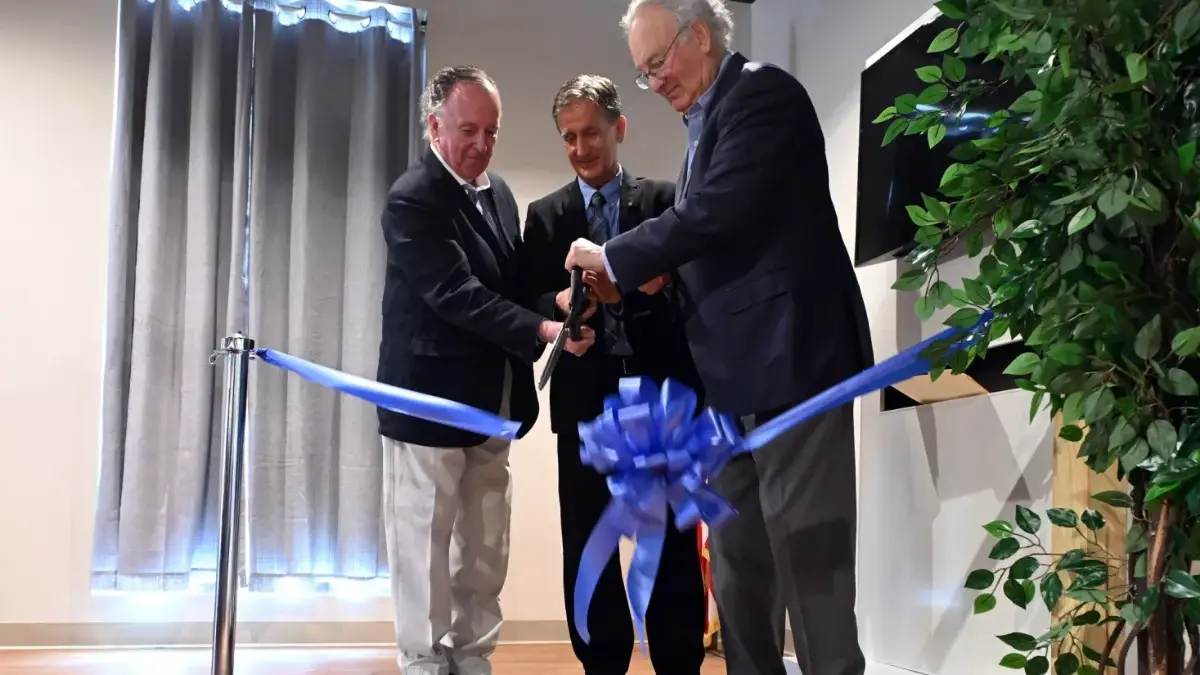
After years of fundraising, construction, collecting artifacts and all sorts of other challenges, that idea became a reality on Thursday. During a special ceremony, the ribbon was officially cut on the Berks Holocaust Museum and Education Center.
“This is a contribution to our community that will last for generations,” Gillen told a crowd of about 50 people gathered at the museum. “There will come a time when all those who lived the experiences depicted in this museum will pass from the scene and that is truly when this museum will be most important.”
Gillen said he believes those who contributed to the creation of the museum — in big ways or small ways — helped to fulfill a sacred duty to ensure that future generations fully understand the atrocities that were committed by witnessing evidence to refute any claim that the Holocaust did not take place.
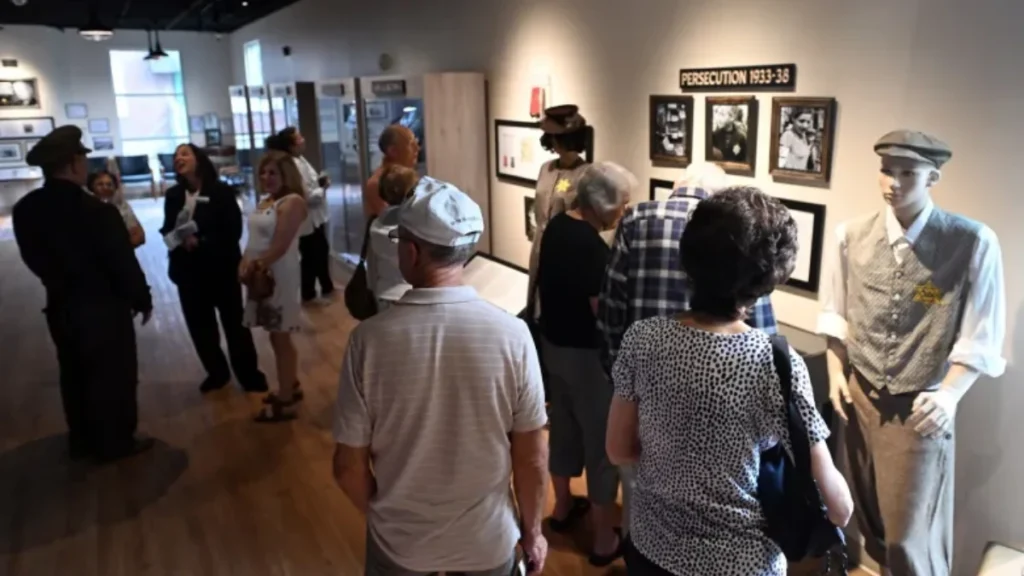
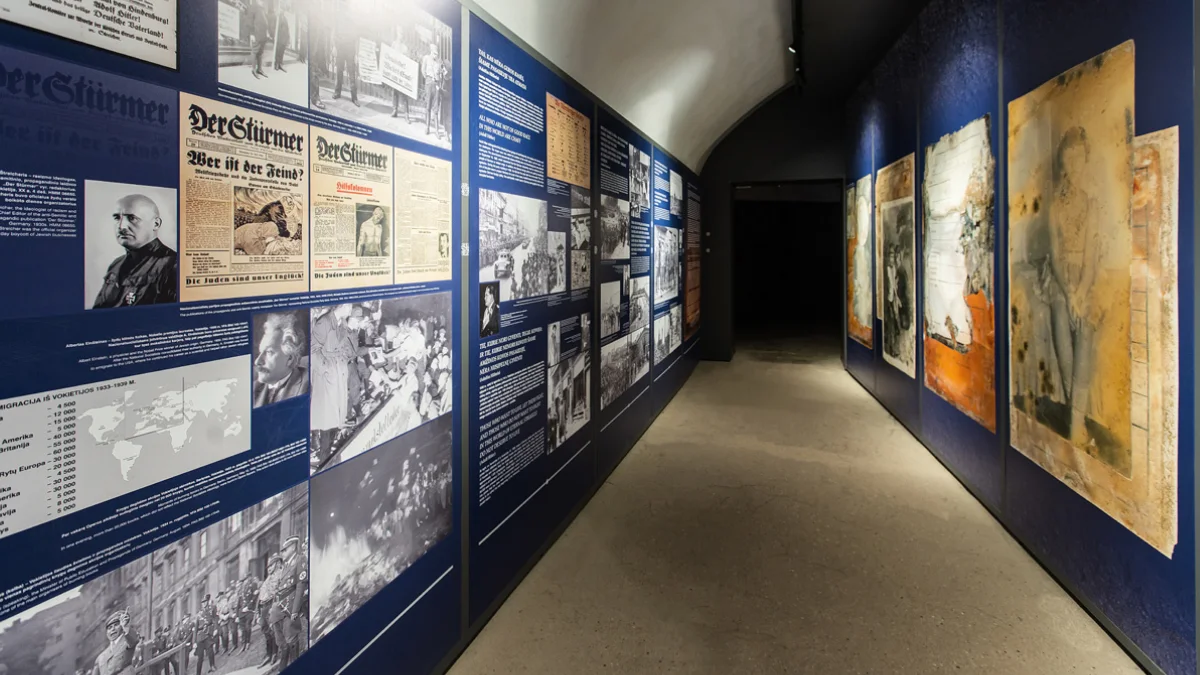
The $4 million building occupies the same lot as the Berks Military History Museum along East Wyomissing Avenue and features a wide range of visual experiences focusing on the victims of the Holocaust and the Allied forces who helped liberate them.
Gillen said a few of the artifacts on display were donated but most have been found online and purchased through a broker in Europe. He said the items are so rare that finding them has been a difficult task.
He has also had assistance from officials at the Holocaust Awareness Museum and Education Center in Philadelphia, who have provided items on permanent loan.
During the ceremony Thursday, Gillen credited many people for helping to realize his vision but highlighted the work of two individuals who played pivotal roles in making the museum a reality.
One of those individuals was Dick Ehst, the former president of Customers Bank, who served as chairman of the capital campaign.
Ehst told the crowd that when Gillen approached him about the concept for the new museum he jumped at the chance to be involved, sharing his own connection to the effort to ensure people never forget the horrors of the Holocaust.
He said his own education started when his father’s military service led his family to live in Germany. At 15 years old he played in a basketball game near the Dachau Concentration Camp, and after the game his coach decided to take the team to see it.
“That experience never left me,” he said.
Ehst said that seeing the camp left a deep impression on him. In the years that followed he visited Holocaust museums throughout the world, including in Jerusalem and Berlin.
So when Gillen came to him with the idea to create the museum he was immediately onboard. He was determined to give other kids the same opportunity to learn that he received all those years ago.
“The effort to try to educate future generations cannot be overstated,” he said. “We must engage all of the school districts in Berks County so that students can really understand what happened.”
The other individual instrumental in the opening of the museum was Vic Hammel.
The retired businessman, who played a big role in raising funds for the museum, told those in attendance that he believes the facility is needed now more than ever as antisemitism is rising sharply around the world.
“This museum symbolizes a step in the right direction,” he said. “We had people and leaders in our community from all backgrounds come together to make this happen — most of whom are not Jewish. And I think that is pretty incredible.”
Hammel said creating the museum is a shining example of what people can accomplish when they decide to work together to stand up for what is right, noting that he believes his late father would be proud of what they have built.
His father, Simon Hammel, was fortunate to have escaped Germany along with his older brother in 1937 just as it was becoming increasingly difficult to do so because of escalating antisemitic laws, economic hardship and limited acceptance by host countries.
Unfortunately, his two older sisters and their families did not escape and all perished in the Holocaust.
“So this is very personal for me,” he said.
Several local officials who supported the creation of the museum were also in attendance to celebrate the opening.
“I will never doubt you again,” state Sen. Judy Schwank said to Gillen as she took her place behind the podium. “I’m so proud of what you and your entire team have been able to accomplish. Having a resource like this here is truly, truly amazing.”
Schwank said that what the exhibitions at the museum will teach visitors is crucial.
“In these times, when the number of Holocaust survivors who can offer firsthand accounts of these horrors has dwindled significantly but the voices who deny the Holocaust have become more strident, nothing could be more important,” she said.
Schwank said the museum provides a significant opportunity to inform young minds about the tragic consequences of hatred without having to travel to Philadelphia or Washington, D.C.
Berks County Commissioner Dante Santoni Jr. presented Gillen with a proclamation from the board recognizing the museum for its unwavering commitment to preserving the memory of the Holocaust and educating the community about one of the darkest chapters of history.
“The museum serves as a reminder of the consequences of hatred, prejudice and intolerance by encouraging visitors to reflect upon the immense suffering inflicted by ideology rooted in discrimination and persecution,” the proclamation stated. “The museum inspires an unrestrained and steadfast commitment to protecting human dignity.”
A Personal Touch
Estee Pickens bent down as she gazed at a glass case on the second floor of the museum that sat beneath a sign reading “Buchenwald 1937-45.”
She strained a bit, trying to get a better look at the items on display inside.
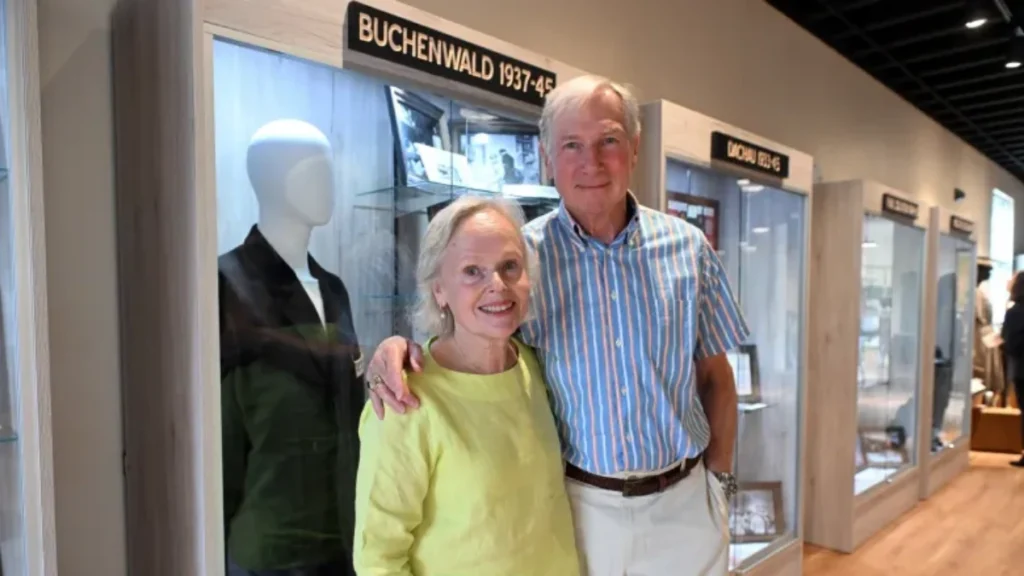
There was a uniform once worn by a prisoner of the Nazi concentration camp. There were photos taken by Nazi guards of the camp and the prisoners held there. There was a plaque describing what had taken place there.
The piece told a story, one quite personal to Pickens. But also one she spent a large portion of her life not knowing.
Her mother, Hilda Jonicsz, was one of the more than a quarter-million prisoners to be sent to the camp, one of the largest established on German soil. But her mother never talked about her time there, never shared her experience.
It was only after she passed away in 1998 that a cousin researched and chronicled what had happened to the Jonicsz family.
“She never talked about the Holocaust, she never spoke a word of Polish, she just wanted to move on with her life,” she said. “There was like this unwritten rule between us that I would never ask and she would never tell.”
Estee said it wasn’t until she read through the research her cousin had conducted that she learned that her mother had been married before the war and that she was older than what she claimed — having decided after the war to subtract the six years she was under the control of Nazis.
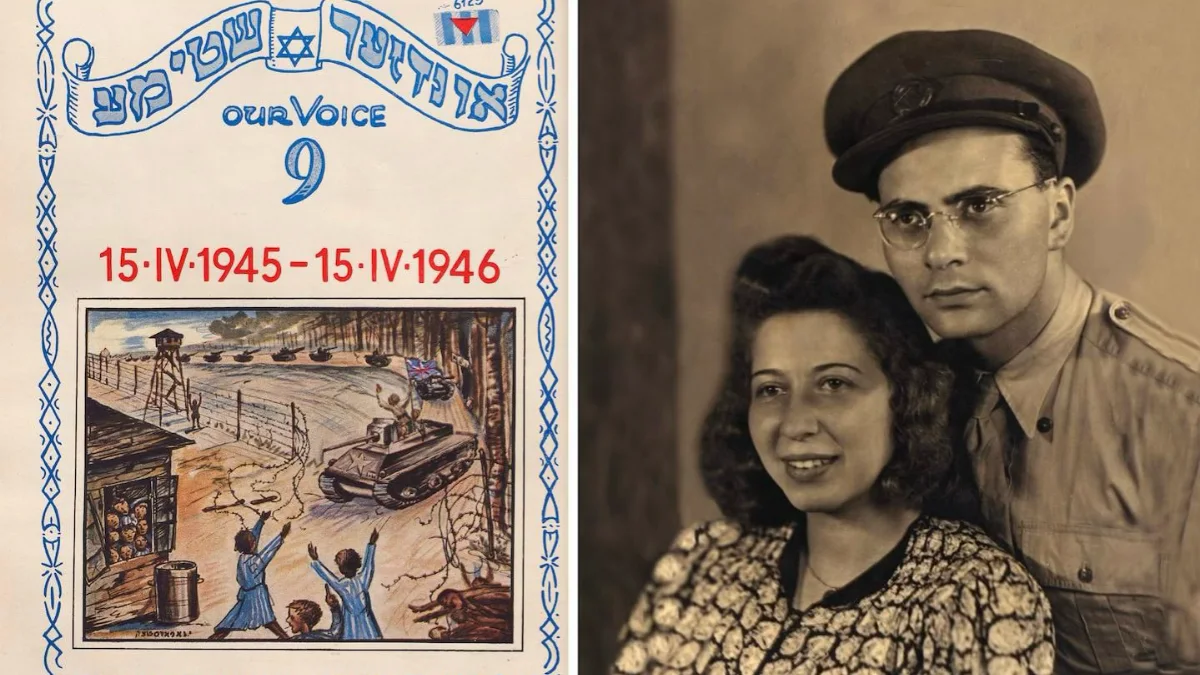
Her mother never shared her story with Estee, but the Montgomery County woman wanted to make sure it was shared with others. That’s why she decided to share a few artifacts of Jonicsz with the museum.
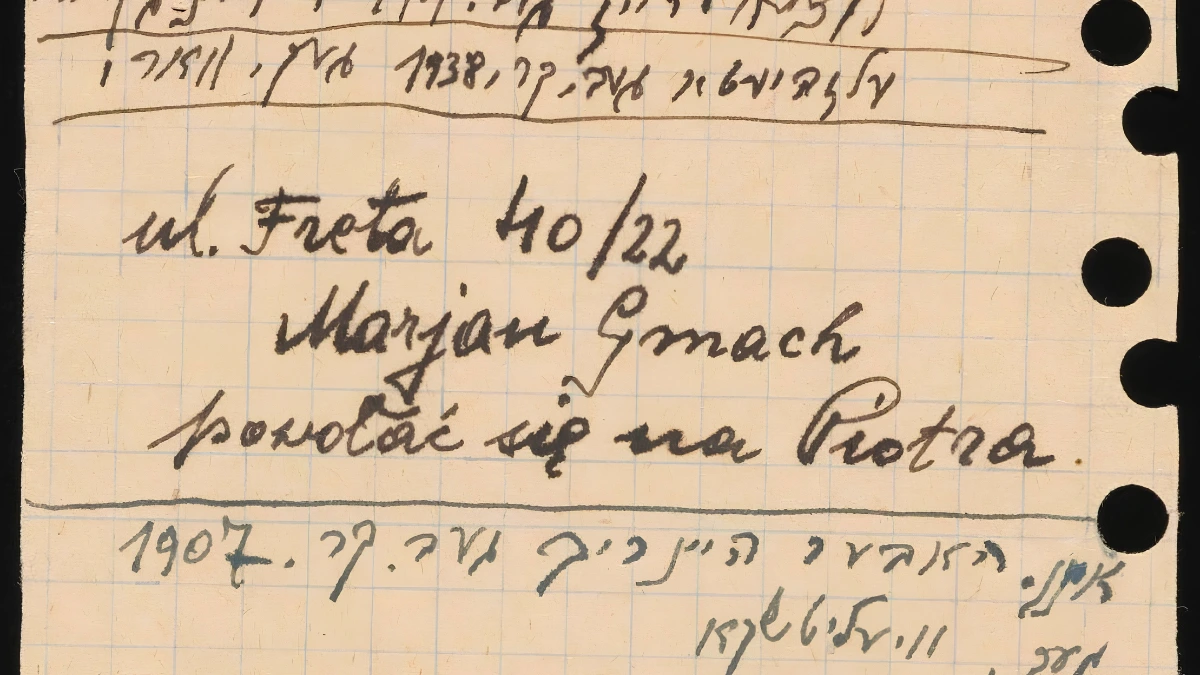
Estee has donated some pictures of her mother and a copy of an official document kept by the Nazis showing where her mother was sent and when during the war. The pieces are not yet on display, but will be soon.
They tell a tale of fear and persecution, as well as resilience and bravery.
Jonicsz was living in Poland when World War II began. Her town was taken over by Nazi forces in September 1939, with the invading forces carrying out a mass killing of the Jewish people there.
Her mother survived that slaughter and was initially sent to the Warsaw Ghetto. She was later selected for a labor camp where she worked as a foreman in a munitions factory for most of the war.
But in 1944 she was sent to Buchenwald.
As the Allied forces approached the camp in 1945, her mother was instructed by her Nazi captors to march. Walking arm-in-arm in rows of five, she convinced the other women in her line to make a run for it into the woods.
They successfully escaped and hid under a bridge until they believed it was safe. They would find refuge at a nearby farmhouse where Allied soldiers would find them and give them their freedom.
Not knowing what had become of her six siblings after the war, Jonicsz returned home to find that they had all made it through the war in many different ways. Some had been sent to camps like her, some escaped to other countries, and some spent the duration of the war hiding in the forest.
After the war, Jonicsz took refuge in Cuba, where she met a man and eventually had Estee in 1955. The family immigrated to the United States six years later.
Like Estee, Susan Atkins-Weiser wants her family’s story to live on.
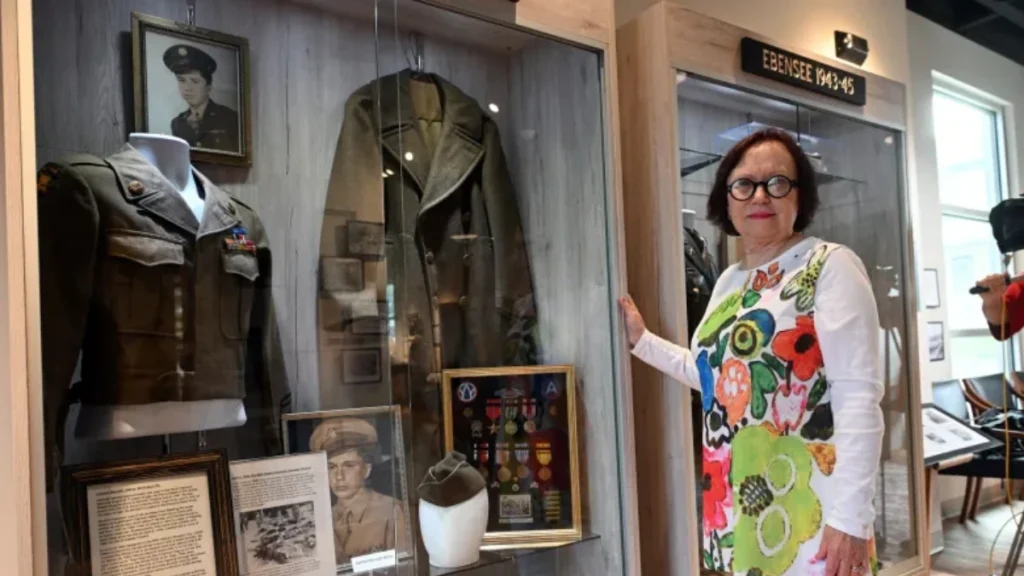
On Thursday, she stood looking at a display case filled with items from her father.
Her father, Carthell Bennett Atkins, was a member of the 89th Infantry Division during the war. On April 4, 1945, his unit came face to face with the horrors of Nazi brutality when they discovered the Ohrdruf labor camp.
Just prior, with the oncoming advance of Allied forces, the Nazis evacuated almost all of the prisoners in a 30-mile death march to Buchenwald. Many prisoners who were too weak or ill to partake in the march were killed.
Following the war, Atkins returned home to Shillington, where he rarely ever talked about what he experienced.
“As he grew older, he started to talk a little more,” Atkins-Weiser said. “I eventually asked him if he could write down what he remembered so that we would be able to have that history, and it was incredible how much detail he could recall all those decades later.
“I don’t think the things he saw ever left him. He remembered the horror of finding thousands of bodies lying in open pits at the camp. And the biggest mystery to him was how the people in nearby towns told him that they had no idea what was going on there.”
Atkins passed away in 2011. But thanks to his daughter’s donation to the museum, generations to come will learn about his experience.
The display case Atkins-Weiser was admiring had information about his service, pictures, his uniform and medals he received.
“My dad kept everything, and I wanted to preserve that in a way that would honor his memory,” she said. “I had reached out to another museum at one point but when I heard about the plan to open this I thought it would be much more meaningful to keep these items in Berks County.”
Just The Beginning
While Thursday marked the official opening of the museum, Gillen noted there are more resources needed to get the facility operating the way he envisioned.
“We are now entering a new phase,” he said.
Gillen said that means more volunteers.
“We want to get as many people as possible into the building so we are going to have to rely on volunteers to serve as guides,” he said. “We have a great team right now, but we will need more if we want to be able to open the museum to students.”
Gillen said he has begun reaching out to several local school districts about the possibility of recruiting students to serve as volunteers in exchange for community service credits. He is also calling on people who may have education or military backgrounds to donate their time to the effort.
There is also more work to be completed inside the museum.
“We got to this point, but we’re going to need more help,” he said. “As you can see, the third floor of the building is still mostly empty, but we didn’t want to wait any longer to open our doors. This will be an ongoing process.”
Gillen said he hopes that as people visit the museum, they will bring with them suggestions about how to fill out the rest of the space. Perhaps they have artifacts they could donate, loved ones they want to memorialize or stories they want to share.
By Karen Shuey | kshuey@readingeagle.com | Reading Eagle – PUBLISHED: July 17, 2026 at 12:15 PM EDT – Photography from the Reading Eagle.