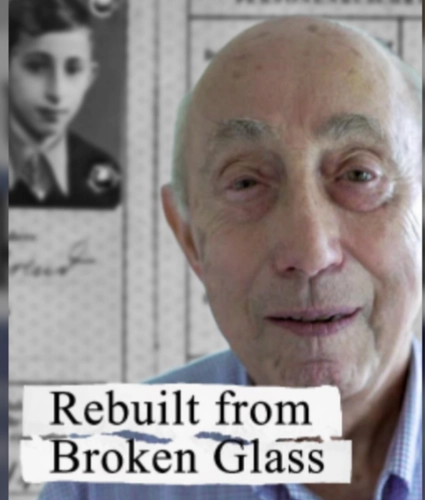
Holocaust survivor Fred Behrend was born in 1926 and lived a life of wealth in a long-gone, old-world Germany, dwelling in the gilded compound once belonging to the manufacturer of the zeppelin airships. Behrend’s childhood came to a crashing end with Kristallnacht (the Night of Broken Glass) and his father’s harrowing internment at the Sachsenhausen concentration camp.
When the Nazis came to power, the wide-eyed boy and his family found themselves living a twentieth-century version of that exodus, escaping oppression and persecution in Germany for Cuba and ultimately a life of freedom and happiness in the United States. Behrend would go on to experience brushes with history involving the defeated Germans.
By the age of twenty, he had run a POW camp full of Nazis, been an instructor in a program aimed at denazifying specially selected prisoners, and been assigned by the U.S. Army to watch over Wernher von Braun, the designer of the V-2 rocket that terrorized Europe and later chief architect of the Saturn V rocket that sent Americans to the moon. Upon returning from service in the U.S., Fred rose out of poverty, built a successful business in Manhattan, and returned to visit Germany a dozen times, giving him a unique perspective into Germany’s attempts to surmount its Nazi past.