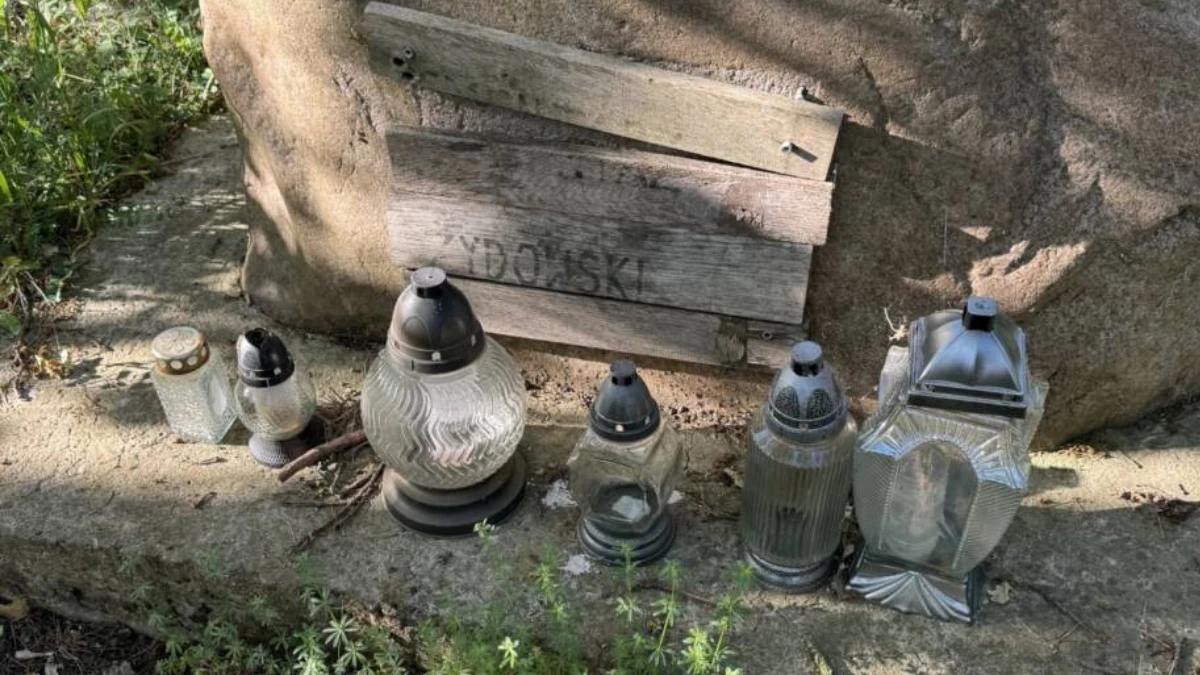
A single stone marker stands at the site of a former Jewish cemetery in Tuliszków, Poland. (Photo credit: Rachel Greenberg)
By Rachel Greenberg, Jewish Exponent, February 5, 2026
In the past few years, antisemitism has moved from the margins to the mainstream — showing up in school hallways, group chats and classrooms in communities that once assumed “it can’t happen here.” That’s why International Holocaust Remembrance Day is not only about memory. It’s about prevention.
After recently marking International Holocaust Remembrance Day — the anniversary of Auschwitz-Birkenau’s liberation — we must remember our collective responsibility to educate future generations about unchecked hatred.
I recently traveled through central Poland, retracing my maternal grandparents’ steps during pre-war and Nazi-occupied Poland. As the granddaughter of Holocaust survivors and a program director with ADL, I anticipated visiting concentration camps and the towns where my family once lived. What I was unprepared for were the countless sites of once-thriving Jewish life now erased from awareness.
My grandfather, Felix Goldberg, spent significant time in Tuliszków, where his parents and grandparents were raised. Before World War II, around 250 Jews lived there. Only one survived. During our visit, our guide located the former Jewish cemetery. He led us down a narrow path to a forest-like area. In the middle stood a single rock inscribed “Cmentarz żydowski” — Jewish cemetery in Polish.
My heart sank. I was standing on the unmarked graves of my family. This sacred space had been demolished, and gravestones were used to build homes and pave roads. How could townspeople living feet away continue without acknowledging this history?
Later, we visited my grandmother’s town, Pińczów, where non-Jewish individuals are recovering gravestones repurposed as building materials. The synagogue is now surrounded by a memorial wall of recovered stones. One caught my eye — marked with paint from its use in construction. This stone carried two stories: one before the war, another even more profound.
Standing among those stones, I thought of Jewish students in Pennsylvania facing their own erasure — not of memory, but of safety and belonging.
In 2024, ADL recorded 9,354 antisemitic incidents nationwide — the highest in 46 years of tracking, a 344% increase over five years. The school crisis is especially alarming. ADL recorded 860 antisemitic incidents in K-12 schools in 2024 — a 434% spike since 2020. Seventy-one percent of Jewish parents and 37% of non-Jewish parents reported their child witnessed or experienced antisemitism in classrooms.
Yet only 21% of parents report their child’s school provides antisemitism education, despite 86% supporting it and 88% supporting Holocaust education.
This journey reinforced the urgency of action. Education is key.
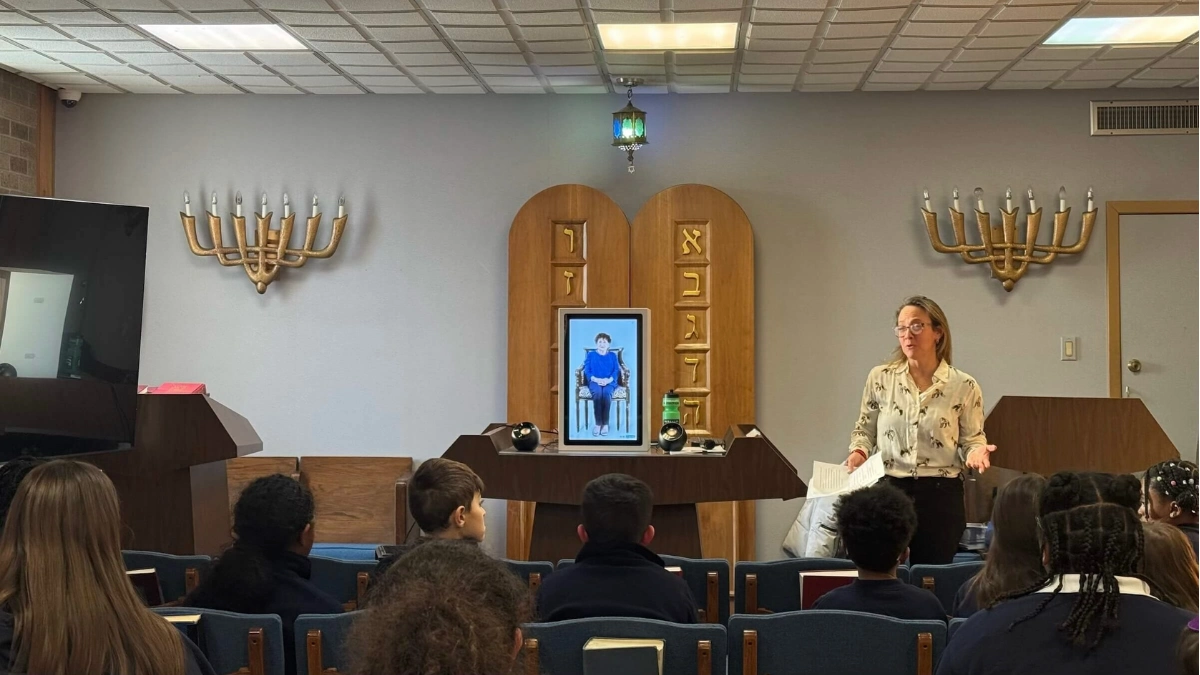
Echoes & Reflections — a partnership of ADL, USC Shoah Foundation and Yad Vashem — has reached more than 175,000 educators since 2005, ultimately educating 11 million students. The program prepares educators to teach the Holocaust through engagement and critical thinking, rich with survivor testimony.
ADL research shows Holocaust education counters antisemitic beliefs: respondents whose schools taught about the Holocaust endorsed the fewest anti-Jewish statements.
But Holocaust education alone isn’t enough. Young people also need practical tools for what they encounter today — antisemitic stereotypes disguised as “jokes,” conspiracy theories online, harassment in schools and intimidation on campus. That means giving students space to explore identity, name what they’re seeing and practice responding safely and effectively — whether in a hallway or on a screen. Programs like ADL’s Words to Action aim to do that for Jewish students.
A Call to Action
In the immediate aftermath of observing International Holocaust Remembrance Day, we must commit to action.
Educators: Strengthen Holocaust and antisemitism education — and make sure teachers have training and classroom-ready resources.
Parents: Ask what Holocaust and antisemitism education your school provides, and how incidents are handled when they arise.
Community leaders: Support Holocaust education requirements and the funding to implement them meaningfully, including professional development for educators.
Everyone: Speak up when you witness antisemitism. Document what happened, support those targeted and report incidents through the appropriate channels — including to ADL when helpful — so patterns are recognized and addressed.
Antisemitism didn’t end with the Holocaust. We honor those who perished — including my family whose graves lie unmarked beneath Tuliszków’s trees — by standing against prejudice in all forms.
As we remember the Holocaust, let us remember not just what was lost, but what we still have the power to protect.
Rachel Greenberg is the program director for ADL’s East Division. She lives in Philadelphia.